


 +86-731-89578196
 [email protected]


- Home
- Our Company
-
Products
Sputtering Targets
- Industries
- Blog
- FAQ
- Contact Us
CrN Coating: Properties, Applications, and PVD Deposition Process
views, Updated: 2026-08-13
What Is CrN Coating?
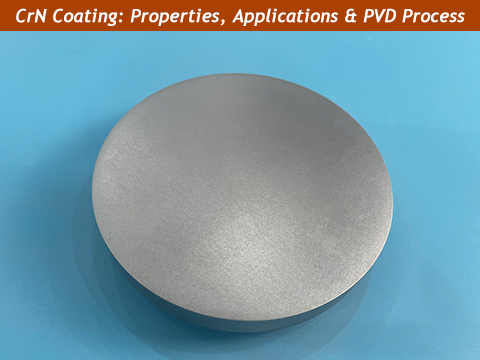
CrN coating, also called chromium nitride coating, is a thin protective layer applied to metal surfaces to improve their performance and service life.It is a type of PVD (Physical Vapor Deposition) coating. During the coating process, chromium material is deposited onto a component surface and reacts with nitrogen gas to form a hard CrN film.
This coating helps metal parts become more resistant to wear, corrosion, and high temperatures. As a result, CrN coating can reduce surface damage, extend component lifetime, and improve performance in demanding working conditions.
CrN coating is commonly used for cutting tools, molds, automotive components, medical instruments, and precision parts. It is especially suitable for applications where surfaces experience repeated friction, contact, or harsh environments.
The quality of a CrN coating depends on many factors, including the coating equipment, process parameters, and the quality of the raw material. A high-purity chromium sputtering target is essential for producing stable and uniform CrN films.
For manufacturers using PVD coating technology, choosing a reliable sputtering target supplier helps ensure consistent coating quality and production efficiency.
Key Properties of CrN Coating
CrN coating is widely used in PVD applications because it provides excellent surface protection, improved durability, and better processing performance. Its unique properties make it suitable for tools, molds, and precision components that require long service life and stable performance.
Excellent Corrosion Resistance
CrN coating creates a dense protective layer on the surface of a component. This layer helps protect the base material from moisture, chemicals, and corrosive environments.As a result, coated parts can maintain better performance and a longer service life, even under challenging working conditions.
Excellent Wear Resistance and Low Friction
CrN coating has high wear resistance and good friction-reducing properties. It helps minimize surface damage caused by repeated contact, sliding, and mechanical stress.For cutting tools, molds, and precision components, CrN coating can reduce wear and improve operational reliability.
Protects Surface Finish
CrN coating can be applied to both mirror-finished and textured surfaces while maintaining the original surface quality.This makes it a good choice for molds and components where both appearance and durability are important.
Improved Release and Demolding Performance
CrN coating has low chemical interaction with many common materials. This allows materials to separate more easily from the coated surface during molding processes.For injection molds and forming tools, CrN coating can help reduce material sticking, improve demolding performance, and increase production efficiency.
Environmentally Friendly Coating Process
CrN coating is produced through a PVD process that provides a clean and controlled coating solution.The stable CrN film helps prevent the release of harmful chromium ions during normal use, making it a suitable choice for applications that require reliable performance and environmentally responsible manufacturing.
How Is CrN Coating Deposited?
CrN coating is mainly produced through a PVD (Physical Vapor Deposition) process, which creates a thin and dense chromium nitride layer on the surface of a component.During the coating process, a chromium sputtering target is used as the chromium source. In a vacuum chamber, chromium atoms are released from the target and react with nitrogen gas to form a CrN coating on the substrate surface.
Reactive Magnetron Sputtering Process
One of the most common methods for producing CrN coatings is reactive magnetron sputtering.The basic process includes:
1. Vacuum preparation
The coating chamber is evacuated to create a clean environment and reduce contamination during deposition.
2. Chromium target sputtering
A high-purity chromium sputtering target is bombarded by energetic ions. This causes chromium atoms to be released from the target surface.
3. Reaction with nitrogen gas
Nitrogen gas is introduced into the chamber. The released chromium atoms react with nitrogen to form chromium nitride (CrN).
4. Film deposition
The CrN particles travel through the vacuum chamber and deposit onto the component surface, forming a uniform protective coating.
The final coating performance depends on several factors, including target purity, deposition parameters, substrate condition, and process control. A high-quality chromium sputtering target helps achieve a stable deposition rate, uniform coating thickness, and consistent film properties.
Why Sputtering Targets Matter for CrN Coating Quality
The sputtering target is one of the key materials in the PVD coating process. Impurities or uneven target composition can affect coating quality, including film uniformity, adhesion, and surface performance.For this reason, coating manufacturers typically require chromium sputtering targets with:
· High purity and consistent composition
· Uniform microstructure
· Good density and low defect levels
· Stable sputtering performance
By selecting reliable sputtering materials and optimizing the PVD process, manufacturers can produce CrN coatings with excellent durability, appearance, and long-term performance.
Applications of CrN Coating
CrN coating is widely used for components that require low friction, high wear resistance, corrosion protection, and long service life. It is especially suitable for mechanical parts and molds exposed to repeated movement, friction, or demanding production conditions.
Sliding Friction Components
CrN coating is commonly applied to sliding components that experience continuous contact and movement.The hard and low-friction coating layer helps reduce surface wear caused by friction, improving component durability and maintaining stable operation over a longer service period.
Automotive Piston Rings
Automotive piston rings operate under high temperatures, pressure, and repeated friction inside engines.CrN coating can improve the surface performance of piston rings by reducing friction and wear. This helps extend service life and improves the reliability of engine components.
Injection Mold Cavities and Sliding Parts
CrN coating is widely used for injection molds, especially mold cavities and sliding components that require high surface durability.The coating improves wear resistance and corrosion protection, while its low surface adhesion helps reduce material sticking during molding. This can improve demolding performance and production efficiency.
High-Gloss Mirror Molds
For high-gloss mirror molds, maintaining surface quality is critical.CrN coating provides excellent protection for polished mold surfaces, helping maintain the smooth finish and improving mold durability during repeated production cycles.
CrN Coating vs TiN Coating: Why Choose Chromium Nitride?
TiN (Titanium Nitride) coating is one of the most widely used PVD coatings for cutting tools and industrial components. However, as application requirements become more demanding, CrN coating has gained increasing attention as an alternative solution due to its excellent balance of hardness, wear resistance, toughness, and corrosion protection.Similar PVD Coating Technology
Both CrN and TiN are transition metal nitride coatings produced through PVD processes, such as reactive magnetron sputtering and arc ion plating.During deposition, metal atoms react with nitrogen gas to form a dense nitride coating layer on the substrate surface. These coatings are widely used to improve the wear resistance, corrosion resistance, and service life of tools, molds, and mechanical components.
CrN Offers Better Toughness and Lower Internal Stress
Compared with TiN coating, CrN coating has lower internal stress and better toughness.Lower residual stress helps improve coating adhesion and reduces the risk of cracking or peeling during operation. This makes CrN coating suitable for applications requiring thicker coatings or long-term mechanical reliability.
Better Wear Resistance and Friction Performance
Both TiN and CrN coatings provide excellent wear protection. However, CrN coating offers better tribological performance in many applications due to its combination of hardness, toughness, and lower friction characteristics.It can effectively reduce mechanical wear caused by sliding contact, making it suitable for:
· Sliding components
· Injection mold parts
· Automotive piston rings
· Precision mechanical components
Superior Corrosion Resistance
One of the key advantages of CrN coating is its excellent corrosion resistance.Compared with TiN coating, CrN provides better protection in environments exposed to moisture, chemicals, and corrosive conditions. This makes it a preferred choice for components where long-term surface protection is required.
Better Performance in Dry Cutting Applications
CrN coating also shows advantages in dry machining applications. Its low friction characteristics and stable performance help reduce tool wear during cutting processes, especially when lubrication is limited.For certain machining applications, CrN-coated tools can achieve longer service life compared with uncoated tools and some traditional nitride coatings.
Easier Industrial Production and Thick Film Deposition
CrN coating has good process controllability and can achieve high deposition rates, making it suitable for large-scale industrial production.Its ability to form thicker coatings while maintaining good adhesion and performance provides additional flexibility for demanding applications.
CrN or TiN: Which Coating Should You Choose?
The best choice depends on the application requirements:| Requirement | Recommended Coating |
|---|---|
| General cutting tools | TiN / CrN |
| High wear resistance | CrN / TiN |
| Sliding friction components | CrN |
| Corrosion protection | CrN |
| Injection molds and forming tools | CrN |
| Golden decorative appearance | TiN |
| Applications requiring thicker coatings | CrN |
Overall, CrN coating is considered one of the most promising alternatives to TiN coating because it combines excellent wear resistance, lower friction, better corrosion resistance, and reliable industrial scalability.
For manufacturers producing CrN coatings, selecting high-quality chromium sputtering targets is essential to achieve consistent coating structure, adhesion, and long-term performance.
Chromium Sputtering Targets for CrN Coating Applications
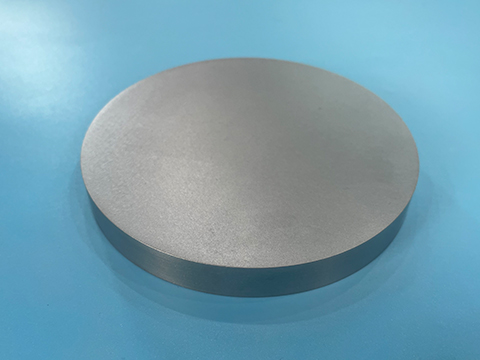
The performance of CrN coating depends not only on the PVD coating process but also on the quality of the chromium sputtering target used during deposition.
In reactive magnetron sputtering, the chromium target provides the chromium source. Chromium atoms released from the target react with nitrogen gas to form a CrN coating layer on the component surface.
A high-quality chromium sputtering target helps coating manufacturers achieve:
· Stable deposition performance – ensuring consistent coating thickness and quality.
· Uniform coating structure – helping produce smooth and reliable CrN films.
· Better coating performance – supporting good adhesion, wear resistance, and long service life.
Choosing a reliable chromium sputtering target supplier is an important step for coating manufacturers who need consistent CrN film quality and stable production performance.
Conclusion
CrN coating provides an effective solution for industries that need better surface performance. However, achieving consistent CrN coating quality depends on both the PVD process and the quality of the coating materials.A high-quality chromium sputtering target helps ensure stable deposition and uniform CrN films. For coating manufacturers, choosing the right sputtering material is an important step toward improving coating results and production efficiency.
As an experienced sputtering target supplier, AEM Deposition provides high-purity chromium sputtering targets and customized solutions for CrN coating applications. Contact us to discuss your requirements.
大强请查看
LATEST NEWS