


 +86-731-89578196
 [email protected]


- Home
- Our Company
-
Products
Sputtering Targets
- Industries
- Blog
- FAQ
- Contact Us
Germanium Applications: Key Uses in Electronics, Optics, and Thin Film Technologies
views, Updated: 2026-03-20
Introduction
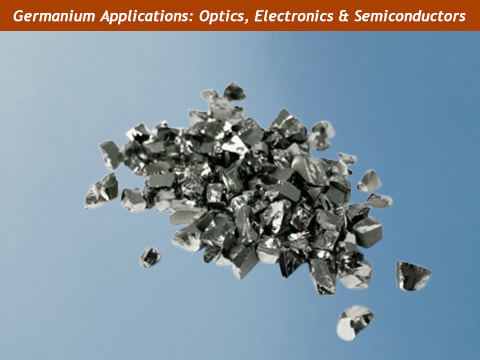
Germanium is an important semiconductor material used in many modern technologies. Although silicon is the most common semiconductor today, germanium still plays a key role in several specialized applications.Germanium has some unique properties. It allows electrons to move quickly, which helps electronic devices operate efficiently. It also has excellent infrared transmission and a high refractive index, making it a good material for infrared optical systems and sensors.
Because of these advantages, germanium is widely used in industries such as:
- fiber optic communication
- infrared optical systems
- semiconductor devices
- high-efficiency solar cells
- thin film deposition
In the following sections, we will introduce the main applications of germanium and the germanium products commonly used in these industries.
What is Germanium?
Germanium (chemical symbol Ge) is a semiconductor material in Group IV of the periodic table, the same group as silicon. It has properties between metals and nonmetals, which allows it to conduct electricity under controlled conditions.Germanium was discovered in 1886 and was one of the first materials used in early semiconductor devices. Today, silicon is more common in electronics, but germanium is still important for applications that require its special optical and electrical properties.
Some key properties of germanium include:
- Semiconductor properties – it can control the flow of electricity in electronic devices
- High electron mobility – electrical signals can move quickly through the material
- Good infrared transmission – germanium can transmit infrared light efficiently
- High refractive index – useful for optical components
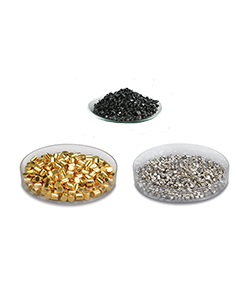
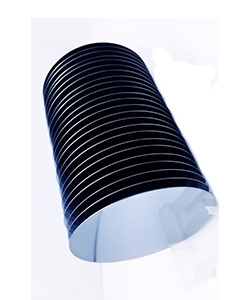
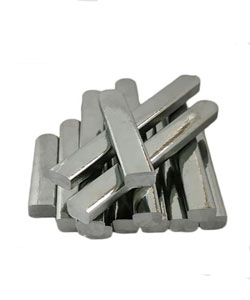
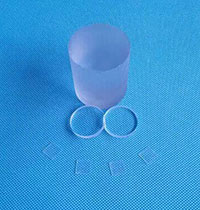
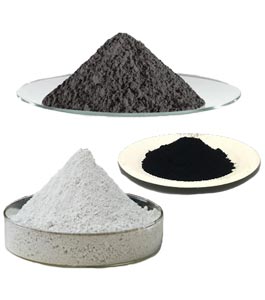
Germanium materials are available in different forms for industrial use, including germanium wafers, germanium sputtering targets, germanium metal pieces, and germanium powders. Different forms are used depending on the manufacturing process and application.
How High-Purity Germanium is Produced
Many germanium applications require very high purity materials, especially in semiconductor and optical industries. Impurities can affect electrical performance and optical quality, so purification is an important step in germanium production.One of the most common purification methods is zone refining. In this process, a small molten zone is slowly moved along a germanium bar. Because impurities prefer to stay in the liquid region, they move with the molten zone toward one end of the bar. After several passes, the impurity-rich end can be removed, leaving very pure germanium.
Using this method, germanium can reach very high purity levels, such as 6N–7N germanium for semiconductor applications.
Maintaining high purity and stable material quality is essential for ensuring reliable performance in advanced electronics, optical systems, and thin film technologies.
Germanium Applications in Fiber Optic Communication
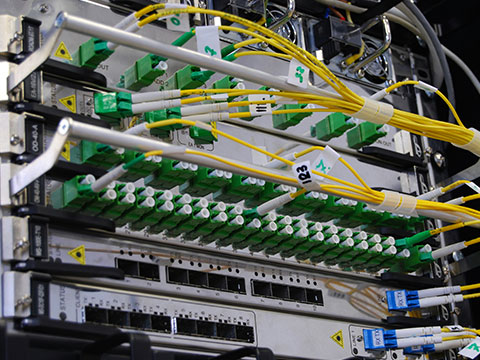
One of the most important uses of germanium today is in fiber optic communication systems. Fiber optics are widely used to transmit large amounts of data through light signals, especially in internet and telecommunications networks.
In optical fibers, germanium dioxide (GeO₂) is commonly added to the core of the fiber as a dopant. This helps increase the refractive index of the fiber core, allowing light signals to stay inside the fiber and travel efficiently over long distances.
Because of this property, germanium plays an important role in improving the performance of optical fibers. It helps support:
- high-speed internet connections
- long-distance telecommunications
- data transmission in global network infrastructure
Germanium in Infrared Optical Systems
Germanium is widely used in infrared (IR) optical systems because it can transmit infrared light very well. This makes it an important material for devices that detect or use heat and infrared radiation.Germanium performs especially well in the 8–14 μm infrared wavelength range, which is commonly used in thermal imaging technologies. Because of this property, germanium is often used to make infrared optical components such as:
- infrared lenses
- infrared windows
- optical domes
- infrared filters
Thanks to its strong infrared performance, germanium remains an important material for many infrared optical applications.
Germanium Wafers in Semiconductor Devices
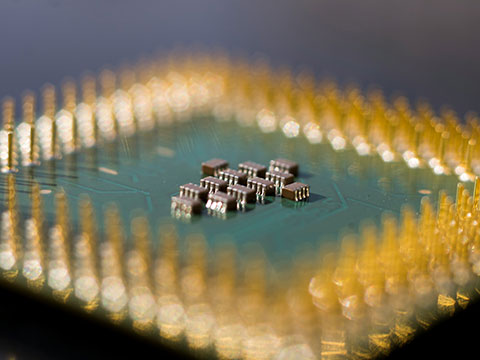
Germanium wafers are used in several semiconductor applications because of their good electrical properties. One important advantage of germanium is its high electron mobility, which allows electronic signals to move faster than in some other semiconductor materials.
Germanium wafers are commonly used in:
- silicon-germanium (SiGe) devices for high-speed electronics
- radiation detectors used in scientific and medical equipment
- advanced semiconductor research
Because of these advantages, germanium wafers remain an important material in specialized semiconductor technologies.
Germanium in Thin Film Deposition (Sputtering Targets)
Germanium is also used in thin film deposition processes, especially in semiconductor and optical coating applications. In these processes, germanium thin films are deposited onto substrates to create functional layers in electronic or optical devices.
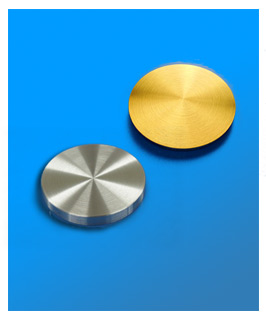
One common material used for this purpose is the germanium sputtering target. During the sputtering process, germanium atoms are released from the target and deposited onto a surface to form a thin film.
Germanium sputtering targets are commonly used in applications such as:
- semiconductor thin films
- optical coatings
- infrared optical films
- electronic device manufacturing
Germanium in Solar Cells and Photovoltaics

Germanium is also used in high-efficiency solar cells, especially in applications where performance and reliability are very important.
One common use is as a substrate material for multi-junction solar cells. These solar cells are designed to capture different parts of the solar spectrum, which helps improve energy conversion efficiency.
Germanium-based solar cells are often used in:
- satellites
- spacecraft power systems
- aerospace solar panels
Conclusion
Germanium is an important material used in many modern technologies. It is widely used in fiber optics, infrared optical systems, semiconductor devices, solar cells, and thin film deposition.Germanium materials are available in different forms for different uses. For example, germanium wafers are used in semiconductor devices, and germanium sputtering targets are used in thin film coating processes.
As technology continues to develop, the demand for germanium materials is also increasing.
If you need high-purity germanium wafers, germanium sputtering targets, or other germanium materials, AEM Deposition can be a reliable choice for your projects.
LATEST NEWS