


 +86-731-89578196
 [email protected]


- Home
- Our Company
-
Products
Sputtering Targets
- Industries
- Blog
- FAQ
- Contact Us
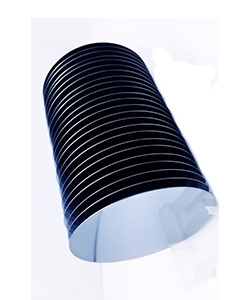
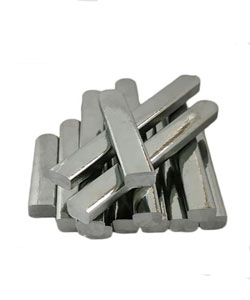

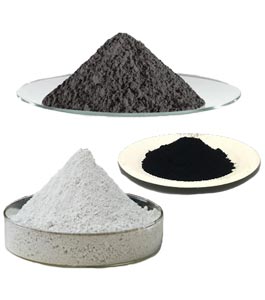
Choosing the Right Sputtering Targets for Conductive Coatings
views, Updated: 2026-04-15
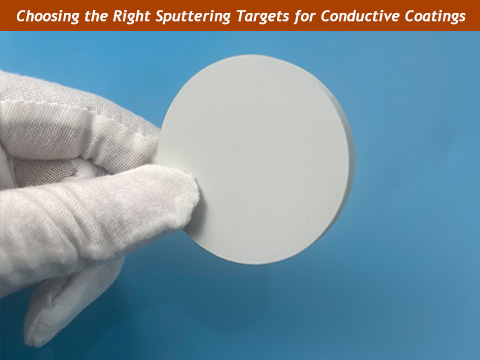
What is Conductive Coatings
Conductive coatings are thin layers applied to a surface to make it electrically conductive. They are used in many industries, including electronics, displays, solar panels, and EMI shielding.The performance of a conductive coating depends on the material, how it’s applied, and the quality of the process. One of the most common methods to create these coatings is sputtering. In sputtering, atoms are dislodged from a target material and deposited onto a surface, forming a precise and uniform layer.
The choice of sputtering target is very important. It affects the coating’s conductivity, adhesion, and durability. Common materials include copper, silver, and nickel, as well as transparent conductive oxides like ITO (Indium Tin Oxide), AZO (Aluminum-doped Zinc Oxide), and IGZO (Indium Gallium Zinc Oxide).
In the next sections, we will look at where conductive coatings are used, how to optimize them with the right targets, and what new target materials are available for advanced applications.
Conductive Coatings Types and Typical Sputtering Targets
Conductive coatings create paths for electricity on a surface. The performance depends on the coating material, binder, and application method. They can be categorized into several types:1. Transparent Conductive Coatings
Definition: Thin, see-through coatings that allow electrical current to flow.Applications: Touchscreens, OLED displays, flexible solar panels, smart windows.
Typical Materials:
· ITO sputtering targets (Indium Tin Oxide) – standard for transparent electrodes.
· AZO sputtering targets (Aluminum-doped Zinc Oxide) – low-cost alternative with good transparency and conductivity.
· IGZO sputtering targets (Indium Gallium Zinc Oxide) – ideal for high-resolution displays and TFTs.
· Polymer-based targets – such as PEDOT:PSS for flexible, printable coatings.
2. Metal-Based Conductive Coatings
Definition: Opaque coatings providing high conductivity and often mechanical durability.Applications: EMI shielding, electrical contacts, heating elements, flexible circuits.
Typical Materials:
· Copper (Cu) sputtering targets – widely used for high-current traces and general conductivity.
· Nickel (Ni) sputtering targets – corrosion-resistant coatings for industrial and magnetic applications.
· Tantalum (Ta) sputtering targets – used for high-temperature or chemically resistant conductive layers.
3. Carbon and Anti-Static Coatings
Definition: Coatings that prevent static build-up and provide moderate conductivity.Applications: Packaging for electronics, cleanrooms, touch-sensitive surfaces.
Typical Materials:
· Carbon sputtering targets – graphite or graphene for lightweight, flexible coatings.
· Carbon nanotube targets – high conductivity and flexibility for wearable electronics.
· Polymer-doped targets – conductive polymers for anti-static or low-resistance films.
4. Functional Hybrid Coatings
Definition: Coatings that combine conductivity with special properties like transparency, flexibility, or durability.Applications: Flexible electronics, transparent EMI shielding, self-healing or temperature-responsive films.
Typical Materials:
· Metal-oxide composite sputtering targets – e.g., Ag/ITO or Cu/ITO for dual-function coatings.
· Layered targets – multiple materials for improved conductivity, transparency, or mechanical stability.
· Doped oxides – Ga- or Al-doped ZnO to optimize transparency and conductivity.
· Functional polymers with conductive fillers – for stretchable or wearable devices.
Conductive Coatings Applications
Conductive coatings are increasingly used in advanced electronics, industrial, and emerging technologies. Key applications include:1. Transparent Conductive Coatings
- Flexible displays: Silver nanowire or PEDOT:PSS coatings allow foldable smartphones and tablets by replacing brittle ITO.
- Solar panels: Transparent polymer or oxide coatings reduce reflection, improving energy conversion efficiency.
- Smart windows: Thin transparent coatings control light transmission and conduct electricity for heating or dimming.
2. Metal-Based Coatings for EMI Shielding
- 5G devices: Nickel or copper coatings on base stations provide over 60dB shielding effectiveness.
- Medical equipment: Carbon or metal composite coatings protect sensitive electronics while allowing X-ray transparency.
3. Anti-Static and Dissipative Coatings
- Prevent static buildup on electronics packaging, industrial flooring, and precision instruments.
- Lightweight, flexible solutions using graphene, carbon nanotubes, or conductive polymers.
4. Functional Hybrid Coatings
- Self-healing coatings: Microcapsules release conductive particles to repair scratches automatically.
- Temperature-responsive coatings: VO₂-based coatings change resistance with temperature, used in smart building glass.
- Flexible electronics and wearables: Hybrid coatings combine metal and oxide layers for conductivity, durability, and optical transparency.
5. Emerging Frontiers
- Biocompatible coatings: Conductive hydrogels for implantable electrodes.
- Space applications: Nitride coatings resist atomic oxygen while maintaining conductivity for spacecraft surfaces.
- Cost-effective alternatives: Copper-coated aluminum replaces silver in some applications with 1/20th the cost but 80% conductivity.
Future-Forward Sputtering Targets for Advanced Conductive Coatings
Conductive coatings are now used in cars, spacecraft, and high-tech electronics. To meet these needs, future-forward sputtering targets make coatings that are strong, reliable, and long-lasting.
In cars, conductive coatings must survive humidity, salt, and heat. Using graphene/silane composite coatings, these coatings can last three times longer than traditional metal or oxide coatings. They also keep good conductivity, strong adhesion, and corrosion resistance, which helps electronic parts work properly for many years.
In space, coatings face extreme conditions, including atomic oxygen, radiation, and big temperature changes. Titanium nitride (TiN) sputtering targets create coatings that are conductive and resistant to damage from atomic oxygen. These coatings are used on surfaces like the International Space Station exterior, protecting it while keeping it functional in harsh space conditions.
In flexible electronics and high-tech devices, future-forward coatings make new designs possible. Flexible screens, wearable devices, and advanced solar panels need coatings that are conductive, transparent, and durable. By using hybrid or specially engineered sputtering targets, manufacturers can create coatings that meet these needs.
With future-forward sputtering targets, companies can make conductive coatings that work in the toughest conditions, from cars and spacecraft to flexible electronics, performing much better than standard coatings.
Choosing the Right Target for Your Application
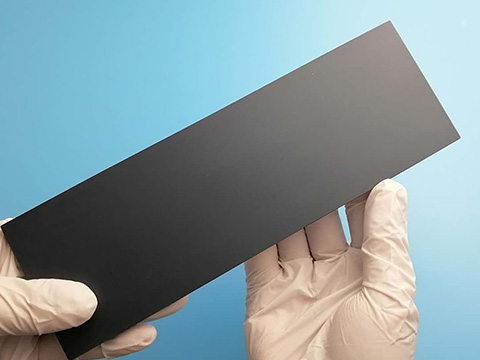
The right sputtering target is key to making a high-quality conductive coating. Each coating type and application has different requirements, so selecting the proper material and form is essential.
For transparent coatings, used in touchscreens, displays, and solar panels, targets like ITO, AZO, or IGZO are best. They provide good conductivity while remaining clear, ensuring the coating performs well without affecting visibility.
For metallic coatings, such as those for EMI shielding or electrical contacts, copper, silver, or nickel targets are ideal. These materials offer high conductivity and durability for industrial and electronic applications.
For anti-static coatings, which prevent static buildup on packaging or sensitive equipment, carbon, ZnO, or polymer-doped targets work well. These provide moderate conductivity and flexibility for practical industrial use.
For hybrid or advanced coatings, like flexible electronics or protective transparent films, layered or composite targets combine metals, oxides, and polymers. This allows coatings to be conductive, durable, and sometimes flexible or self-healing.
Other factors to consider include the substrate type, coating thickness, and deposition method. Choosing a high-quality, well-engineered target ensures the coating is consistent, reliable, and performs as needed.
Working with an experienced supplier such as AEM Deposition can help you match the right target to your application, making the coating process simpler and more effective.
Conclusion
Choosing the right sputtering target is key to making high-quality conductive coatings. The type of coating, the material, and the application all affect which target will work best. From transparent coatings for screens and solar panels to durable coatings for cars and spacecraft, the right target ensures strong adhesion, good conductivity, and long-lasting performance.
By using premium or future-forward sputtering targets, manufacturers can create coatings that meet the toughest requirements and support advanced technologies in electronics, automotive, aerospace, and flexible devices.
Ready to improve your conductive coatings? Contact our experts today to find the best sputtering target for your project.
LATEST NEWS