


 +86-731-89578196
 [email protected]


- Home
- Our Company
-
Products
Sputtering Targets
- Industries
- Blog
- FAQ
- Contact Us
AlTiN Coating: Properties, Applications, and Sputtering Targets
views, Updated: 2026-09-03
What Is AlTiN Coating?
AlTiN (aluminum titanium nitride) coating is a hard ceramic coating made from aluminum, titanium, and nitrogen. It is mainly used to improve hardness, wear resistance, and high-temperature performance.AlTiN is widely used on cutting tools, molds, dies, and other components that operate under high wear or heat. Compared with TiN coatings, the addition of aluminum gives AlTiN better resistance to oxidation at elevated temperatures. This makes it suitable for demanding machining applications.
AlTiN coatings are commonly produced using physical vapor deposition (PVD) methods, including cathodic arc evaporation and reactive sputtering. During reactive sputtering, an AlTi sputtering target supplies aluminum and titanium, while nitrogen gas is introduced into the coating chamber. The aluminum and titanium react with nitrogen to form the AlTiN coating.
The final coating performance depends on several factors, including the Al/Ti ratio, coating thickness, coating structure, and deposition conditions. For this reason, both the AlTi sputtering target and the PVD process need to be properly controlled to achieve a consistent AlTiN coating.
AlTiN Coating Composition and Structure
AlTiN is a solid solution based on aluminum nitride (AlN) and titanium nitride (TiN), with its composition commonly written as Ti₁₋ₓAlₓN. The value of x represents the relative amount of aluminum in the coating.The Al/Ti ratio plays an important role in determining the coating's structure and properties. Adding more aluminum can improve oxidation resistance and high-temperature stability. At the same time, the titanium-rich portion helps maintain the hard TiN-based structure that provides good wear resistance.
At suitable aluminum concentrations, AlTiN typically has a cubic crystal structure. When the aluminum content becomes too high, a hexagonal AlN-rich phase can form. This phase change can affect hardness, toughness, and other coating properties. Therefore, the aluminum content needs to be controlled according to the intended application.
In practice, AlTiN coatings can be engineered with different compositions to meet specific requirements. Controlling the Al/Ti ratio is therefore an important part of AlTiN coating design, while consistent composition and microstructure in the AlTi sputtering target help support stable coating performance.
Key Properties of AlTiN Coatings
AlTiN coatings combine high hardness, excellent wear resistance, and good high-temperature performance. These properties help protect cutting tools and other components from wear under demanding working conditions.· High hardness: The hard ceramic structure provides strong resistance to mechanical wear and surface damage.
· Excellent wear resistance: AlTiN helps reduce wear during cutting and forming operations, extending tool performance.
· High-temperature resistance: AlTiN maintains good stability at elevated temperatures, making it suitable for high-speed machining.
· Good oxidation resistance: The aluminum in the coating plays an important role in protecting the surface from oxidation at high temperatures.
· Good chemical stability: AlTiN is chemically stable and can provide effective protection when machining demanding materials.
At high temperatures, the aluminum in AlTiN can form a thin Al₂O₃ protective layer on the coating surface. This layer helps prevent oxidation and wear, making AlTiN a good choice for high-speed machining.
These properties make AlTiN-coated tools suitable for machining alloy steel, carbon steel, cast iron, hardened steel, stainless steel, titanium alloys, and nickel alloys.
AlTiN Coating Applications
AlTiN coatings are mainly used where high wear resistance and high-temperature performance are required. They are especially common in cutting and forming applications.Cutting Tools
AlTiN is widely used on end mills, drills, milling cutters, and other cutting tools. The hard coating helps reduce wear and allows tools to work under high cutting speeds and temperatures.It is suitable for machining a wide range of materials, including alloy steel, stainless steel, cast iron, hardened steel, titanium alloys, and nickel alloys.
Molds and Dies
AlTiN can also be applied to molds, dies, and forming tools. Its hardness and wear resistance help protect tool surfaces during repeated forming operations and can extend service life.High-Speed Machining
AlTiN is particularly useful for high-speed machining, where cutting temperatures can become high. The aluminum-rich surface can form a thin Al₂O₃ protective layer during cutting, helping the coating resist oxidation and wear.Overall, AlTiN is a practical coating choice for tools that need to withstand high wear, high temperatures, and demanding machining conditions.
How Is AlTiN Coating Deposited?
AlTiN coatings are commonly deposited using physical vapor deposition (PVD). Two widely used methods are cathodic arc evaporation and reactive sputtering.
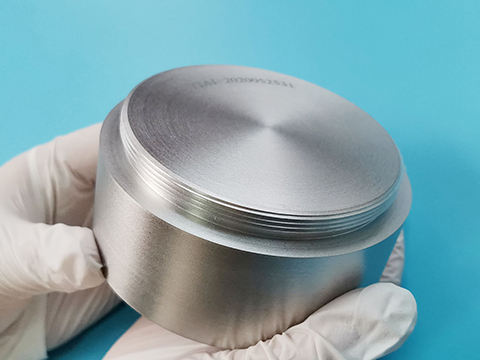
In reactive sputtering, an AlTi sputtering target is used as the source of aluminum and titanium. Nitrogen gas is added to the coating chamber, where it reacts with the sputtered Al and Ti atoms to form the AlTiN coating on the workpiece surface.
The main deposition parameters include target composition, nitrogen flow, chamber pressure, substrate temperature, and deposition power. These parameters affect the coating's composition, thickness, structure, and final performance.
For consistent AlTiN coatings, the sputtering target should have uniform composition and a stable microstructure. This is particularly important when producing coatings for cutting tools and other applications that require consistent wear and thermal performance.
AlTi Sputtering Targets for AlTiN Coatings
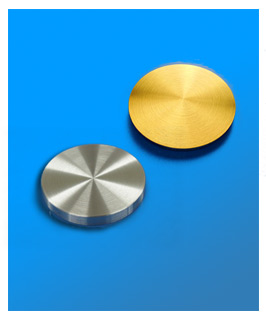
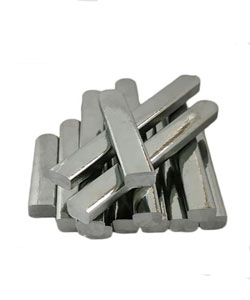
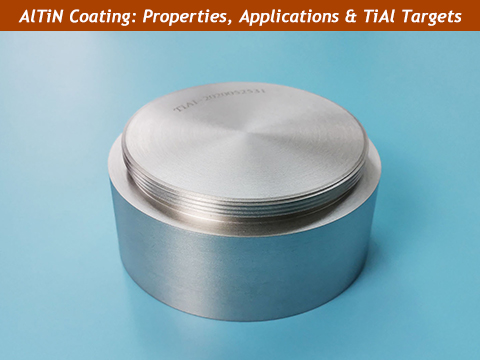
TiAl sputtering targets are used to produce TiAlN coatings for cutting tools and other wear-resistant applications. A well-controlled target composition and microstructure can help achieve a smooth, uniform, and consistent coating.Our TiAl sputtering targets are designed to support high cutting performance, high feed rates, and high metal removal rates. Key advantages include:
· High ductility: The powder metallurgy process helps produce targets with good mechanical strength and reduced risk of cracking during use.
· Good thermal conductivity: Effective heat transfer helps support stable sputtering and a smooth coating surface.
· High material purity: High-purity TiAl helps reduce unwanted impurities in the coating and supports consistent coating quality.
· Uniform microstructure: A controlled microstructure helps promote a more uniform and smooth deposited coating.
We offer TiAl targets in different compositions, including Ti33Al67, Ti50Al50, and Ti70Al30, with a listed purity of 99.80%. The choice of composition can be matched to the requirements of the TiAlN coating and the deposition process.
| TiAl Target Composition | Purity | Density (g/cm³) | Grain Size (μm) | Thermal Conductivity (W/m·K) |
|---|---|---|---|---|
| Ti33Al67 | 99.80% | 3.29 | ≤100 | 98 |
| Ti50Al50 | 99.80% | 3.60 | ≤100 | 70 |
| Ti70Al30 | 99.80% | 3.95 | ≤100 | 40 |
AlTiN Coating vs. TiN Coating
TiN and AlTiN are both widely used hard coatings, but they are suited to different working conditions. TiN is a good general-purpose coating, while AlTiN is better suited to applications with higher heat and wear.| Property | TiN | AlTiN |
|---|---|---|
| Color | Gold | Black |
| Typical thickness | 1–5 μm | 1–4 μm |
| Reference hardness | 2,000–2,500 HV | 3,000–4,000 HV |
| Friction coefficient against steel* | 0.6 | 0.4 |
| High-temperature performance | Up to about 600°C | Up to about 900–1,000°C* |
*Actual temperature capability depends on coating composition, substrate, and deposition conditions.
The main difference is the addition of aluminum. AlTiN can form a thin protective oxide layer at high temperatures. This helps protect the coating from oxidation and wear during demanding machining.
TiN coating is a good choice for general-purpose applications, especially when balanced performance and versatility are important. AlTiN coating is better suited to high-speed machining and applications with higher cutting temperatures and heavier wear.
In simple terms, TiN is a versatile general-purpose coating, while AlTiN is designed for more demanding conditions. The best choice depends on the workpiece material, cutting speed, temperature, and tool requirements.
Conclusion
AlTiN coating is a strong choice for tools and components that face high wear and high temperatures. Its combination of hardness, wear resistance, and oxidation resistance makes it especially useful for demanding machining applications.For coating manufacturers, the TiAl sputtering target is an important part of the process. Consistent composition, high purity, and a uniform microstructure help support stable and repeatable coating results. In simple terms, AlTiN is not just a harder alternative to TiN—it is designed for more demanding working conditions.
Looking for TiAl sputtering targets for AlTiN coating applications? We offer TiAl targets with different Ti/Al ratios, controlled purity, density, and microstructure. Contact us to discuss your target specifications and coating requirements.
LATEST NEWS