


 +86-731-89578196
 [email protected]


- Home
- Our Company
-
Products
Sputtering Targets
- Industries
- Blog
- FAQ
- Contact Us
TiCN Coating: Properties, Applications, and Deposition Methods
views, Updated: 2026-08-31
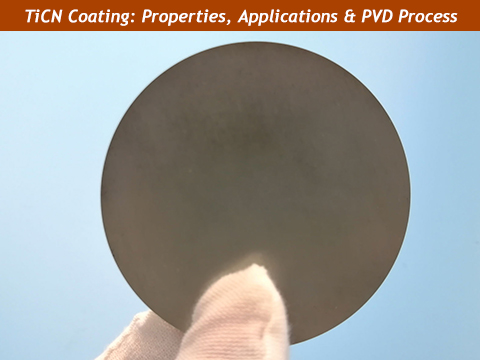
Introduction
TiCN coating, short for titanium carbonitride coating, is a hard ceramic coating used to improve the surface performance of tools and industrial components. It combines high hardness, good wear resistance, and low friction, making it suitable for applications where surfaces face repeated contact, abrasion, or sliding.TiCN coatings are commonly deposited using physical vapor deposition (PVD) processes. By forming a thin protective layer on the substrate, TiCN can improve surface durability without changing the properties of the underlying material.
But what makes TiCN different from coatings such as TiN and TiAlN? And how is TiCN coating produced?
In this guide, we will explain TiCN coating properties, deposition methods, applications, and the role of sputtering targets in PVD coating processes.
1. What Is TiCN Coating?
TiCN coating stands for titanium carbonitride coating. It is a hard ceramic coating made primarily from titanium, carbon, and nitrogen. TiCN is closely related to titanium nitride (TiN), but the addition of carbon gives it a different combination of hardness, friction, and wear resistance.TiCN is usually applied as a thin surface layer rather than used as the bulk material of a component. This allows manufacturers to improve the surface performance while keeping the strength and other properties of the underlying substrate.
TiCN coatings are commonly produced using PVD (Physical Vapor Deposition) processes. During deposition, the coating material is introduced into a vacuum chamber and forms a thin, dense layer on the surface of the substrate.
Compared with TiN, TiCN is often chosen when higher hardness, better wear resistance, or lower friction is required. These characteristics make it particularly useful for cutting tools, forming tools, and other components exposed to repeated contact or abrasion.
In simple terms, TiCN coating provides a hard, wear-resistant surface that helps components perform longer under demanding working conditions.
2. Key Properties of TiCN Coating
TiCN coating is widely used because it combines several properties that help protect surfaces under demanding working conditions. Its performance can vary with coating composition and deposition parameters, but the main advantages include:High Hardness
TiCN is a hard ceramic coating that provides a strong surface layer. Its high hardness helps resist scratching, deformation, and mechanical wear during repeated contact.Excellent Wear Resistance
TiCN can protect tools and components from abrasive and adhesive wear. This makes it useful for applications where surfaces are exposed to continuous friction or repeated machining operations.Low Friction
Compared with some conventional hard coatings, TiCN can provide a relatively low-friction surface. Lower friction can help reduce contact resistance and surface wear, particularly in moving or cutting applications.Good Thermal and Chemical Stability
TiCN can maintain its protective function under demanding operating conditions. Its stability makes it suitable for industrial tools and components that experience heat, mechanical stress, or contact with different materials.Improved Surface Performance
One of the main advantages of TiCN is that it improves the surface properties without requiring the entire component to be made from a hard ceramic material. A relatively thin coating can provide the surface hardness and wear resistance needed while the substrate continues to provide its structural strength.Overall, TiCN coating is valuable because it combines hardness, wear resistance, and friction control in a thin protective layer. The right coating composition and deposition process are important for achieving the desired performance.
3. How Is TiCN Coating Deposited?
TiCN coatings can be deposited using different PVD (Physical Vapor Deposition) processes. In sputtering-based systems, titanium, carbon, and nitrogen can be supplied through different combinations of target materials and process gases.Reactive Sputtering with Titanium and Graphite Targets
One approach is to use titanium and graphite sputtering targets in a mixed atmosphere of argon and nitrogen.During the process, the titanium target provides the titanium source, while the graphite target provides the carbon source. Nitrogen acts as the reactive gas, and argon helps sustain the plasma and support the sputtering process.
The sputtered Ti and C atoms react with nitrogen-containing species and form a TiCN thin film on the substrate.
Sputtering with a Carbon-Containing Gas
Another approach uses a titanium sputtering target together with nitrogen and a carbon-containing gas, such as methane (CH₄) or acetylene (C₂H₂). In this process, the carbon-containing gas provides the carbon source needed to form TiCN.The specific deposition route depends on the PVD equipment, target configuration, and required coating properties.
Regardless of the method, parameters such as target power, gas flow rate, chamber pressure, substrate temperature, and substrate bias need to be controlled carefully. These parameters can affect the coating composition, thickness, hardness, adhesion, and overall performance.
4. TiCN Sputtering Targets: What Materials Are Used?
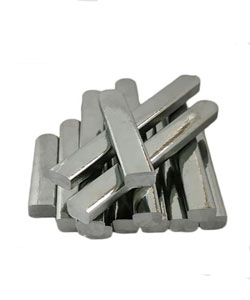
The sputtering targets used for TiCN coating depend on the selected deposition method. In reactive sputtering, the target materials provide the titanium and carbon needed to form the coating.Titanium Sputtering Targets
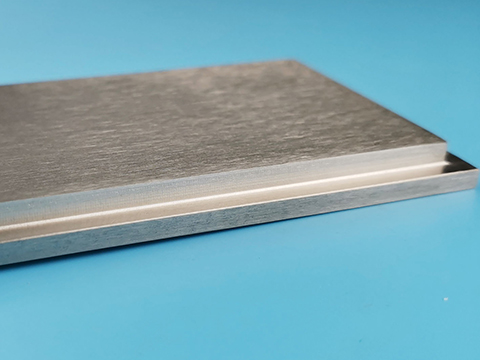
Titanium sputtering targets provide the titanium source for TiCN deposition. When sputtered in an atmosphere containing nitrogen and a suitable carbon source, titanium atoms participate in the formation of the TiCN coating.
Titanium targets are available in different shapes and sizes, including circular, rectangular, and custom configurations, depending on the PVD equipment.
Graphite Sputtering Targets
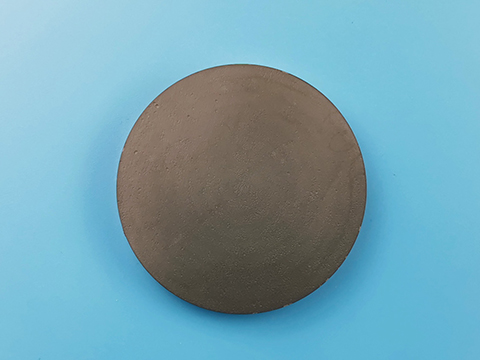
In some TiCN deposition processes, a graphite sputtering target is used together with a titanium target to provide the carbon source.
The titanium and graphite targets are sputtered simultaneously in an argon and nitrogen atmosphere. By controlling factors such as target power and gas flow, the deposition process can be adjusted to achieve the required TiCN composition and coating properties.
What Should You Consider When Choosing Targets?
For sputtering-based TiCN coating, target quality can affect deposition stability and coating consistency. Important factors include material purity, density, composition, dimensions, and surface quality.The target configuration should also match the specific PVD equipment and deposition process. Therefore, titanium and graphite targets should be specified according to the coating system and application requirements, rather than simply the name of the coating.
5. TiCN Coating Applications
TiCN coating is mainly used when a tool or component needs better wear resistance, surface hardness, and friction control. Its properties make it suitable for a range of industrial applications.Cutting Tools
Cutting tools are one of the most common applications for TiCN coating. It can be applied to tools such as:· Drills
· End mills
· Milling cutters
· Carbide inserts
The hard coating helps protect the tool surface from wear during repeated cutting operations. This can help maintain tool performance and extend service life.
Stamping and Forming Tools
TiCN can also be used on punches, dies, and forming tools. These components experience repeated contact and friction during production. A TiCN coating can reduce surface wear and help maintain the tool's working surface over longer production cycles.Wear-Resistant Components
Beyond cutting and forming tools, TiCN can be considered for components exposed to sliding, friction, or abrasive contact. The coating provides a hard surface while the underlying component retains its original bulk properties.Why TiCN Is Used
The main reason to use TiCN is not simply to make a component harder. It is to improve the surface where wear and friction actually occur.For this reason, TiCN coating is particularly useful when manufacturers need a combination of surface hardness, wear resistance, and lower friction rather than relying on the bulk material alone.
6. TiCN vs. TiN vs. TiAlN: Which Coating Is Different?
TiCN is one of several PVD coatings used to improve the surface performance of industrial tools. TiN and TiAlN are two other widely used options, but their properties and typical applications are different.| Coating | Main Characteristics | Typical Applications |
|---|---|---|
| TiN | Good hardness, wear resistance, and chemical stability | General-purpose cutting and forming tools |
| TiCN | Higher hardness, good wear resistance, and low friction | Cutting tools, forming tools, and wear-resistant components |
| TiAlN | Good high-temperature performance and oxidation resistance | High-speed and high-temperature cutting |
TiCN vs. TiN
TiCN is similar to TiN but contains carbon in addition to titanium and nitrogen. This gives TiCN a different balance of hardness and friction properties. TiCN is often considered when greater wear resistance or lower friction is needed.TiCN vs. TiAlN
TiAlN contains aluminum and is particularly useful where high temperature and oxidation resistance are important. TiCN, on the other hand, can be attractive when hardness, wear resistance, and friction are the main concerns.Which One Should You Use?
There is no single coating that is best for every application. The choice depends on factors such as:· Operating temperature
· Workpiece material
· Cutting speed
· Type of wear
· Friction requirements
· Required tool life
· Deposition process
Therefore, TiCN should be selected based on the actual working conditions rather than simply choosing the hardest coating.
7. How to Choose the Right TiCN Coating?
Choosing a TiCN coating is not only about coating hardness. The coating needs to match the working conditions, substrate, and performance requirements of the application.Consider the Operating Temperature
Temperature can affect coating performance. If the application involves high cutting speeds or significant heat generation, the coating should be evaluated for its ability to maintain performance under those conditions.Consider the Type of Wear
Different applications experience different types of wear, such as abrasion, adhesion, or sliding wear. TiCN can be a good option when high surface hardness and wear resistance are important.Consider the Substrate Material
TiCN can be deposited on different tool and component materials, but the substrate must be compatible with the selected PVD process. Surface preparation and coating adhesion are also important for long-term performance.Consider Friction Requirements
For applications involving sliding or repeated contact, friction can be an important factor. TiCN may be suitable when both wear resistance and friction control are required.Consider the Deposition Process
The coating composition and performance depend on the PVD system and its process parameters. When reactive sputtering is used, factors such as target material, gas composition, pressure, power, and substrate temperature need to be properly controlled.In practice, the best TiCN coating is the one that matches the application rather than simply the material specification. Working with the coating supplier and target manufacturer can help ensure that the coating material and deposition process are properly matched.
Conclusion
TiCN coating is a practical choice when a tool or component needs a hard, wear-resistant, and low-friction surface. Its combination of properties makes it useful for cutting tools, forming tools, and other applications where surface wear is a concern.The key is to match the TiCN coating and PVD deposition process to the actual working conditions. For sputtering-based processes, the right target material and stable deposition parameters are also important for achieving consistent coating performance.
If you are looking for titanium sputtering targets for PVD coating applications, AEM Deposition can provide targets in different materials, dimensions, and configurations to meet your specific requirements. Contact us to discuss your application and target specifications.
LATEST NEWS